THE POWER
OF THE STORY.
An artwork is more than an image.
Look closer at the world it carries.
JENNY, THE WOUNDED CHILD
What the World Refuses to See
Silence is what makes people disappear while they are still alive.
I do not paint to represent, but to reveal what remains unseen.
Jenny inhabits a world in which innocence and fear, vulnerability and silence exist side by side. A world where childhood does not necessarily mean protection, and where the loss of freedom can begin long before a child understands what freedom is.
But my work is not only about what happens.
It is about what remains.
What happens to a human being when violence enters their life at an early age? How does it change the way they perceive the world?
They no longer see only what is. They also see what was. Every sensation, every reaction may be filtered through a past that refuses to disappear.
Violence does not end when the act itself is over. It continues in silence, in withdrawal, in mistrust, and in the invisible struggle to preserve one's sense of self.
My paintings from the series about the Child, or Young Jenny — many of which are featured in my art book KonfrontZone — are about sadness, oppression, depression, and ultimately, the transformation of these states of being.
My paintings are about power and determination. The girls and young women in my paintings are survivors, winners, and leaders. They are becoming masters of their own destiny.
Jenny is not simply an image of suffering. She is a confrontation with everything we fail to recognize — and everything we have learned not to see. But she also embodies the determination to step beyond one's own shadow.
My paintings are not answers.
They are confrontations.
THE ADULT JENNY
What Remains
The child grows older. The past does not necessarily grow distant.
Jenny has become a young woman. She knows that something within her does not function the way it seems to function in others. She experiences everything with an intensity that is difficult to contain. Her fears, her desires, her reactions — nothing exists in moderation.
But how can she distinguish who she truly is from what others have made of her?
The codes of her existence have been altered by experiences she never chose. Now she must find a way to rewrite what was imposed upon her, to recognize the patterns that do not belong to her, and to rediscover her original code.
This is not a quiet process.
Jenny lives extremely. She feels extremely. She confronts the world and herself with the same intensity.
Her extravagant outfits, provocative accessories, and extreme appearances are not merely aesthetic choices. They are the visible expression of an inner world in which everything has become amplified — fear and desire, vulnerability and defiance, destruction and the desperate will to survive.
And then there are the masks.
Jenny does not wear a single face. She wears thousands — faces shaped by instinct, by the imprints of experience, by trauma and the mechanisms of survival.
Each mask carries a different response to the world. Some protect her. Others imprison her. Some were created by fear, others by longing, anger, or the desperate need to be seen.
But beneath these countless faces lies the question she can no longer escape:
Which of them is truly hers?
The ball gags are symbols of enforced silence.
They represent the voices that have been suppressed, the truths that have been denied, and the victims who are made to feel responsible for the violence inflicted upon them.
Victim blaming, disbelief, judgment, and the pressure to remain silent become further instruments of oppression. The victim is not only forced to live with what happened, but is often made to defend the very right to speak about it.
The mouth is silenced, but the struggle continues within.
Jenny is possessed by her fears, her longings, and the overwhelming force of her own existence.
But she must become possessed by something greater: the determination to reclaim her freedom.
A freedom she recognizes instinctively, somewhere deep within herself, even when she cannot yet find the way back to it.
She must confront herself — her fears, her desires, the forces that threaten to consume her, and the immense power hidden within them.
There is no gentle passage through this transformation. She burns with an intensity that threatens to destroy her, until the very process of burning begins to change its nature.
If she survives, something entirely different may emerge.
Confrontation is where transformation begins.
THE TROJAN HORSE
The Trojan Horse Method
The palette changed. The investigation did not.
My Sweet Love series extends my artistic investigation into consumer culture, power structures, and social dynamics.
I transform familiar symbols of childhood into seductive, colorful imagery, concealing my most uncompromising observations of the world beneath their seemingly innocent surfaces.
I call this The Trojan Horse Method.
This approach extends beyond Sweet Love. It encompasses my more recent works in which I confront the experiences of adulthood with objects from childhood — gummy bears, stuffed animals, lollipops, and other familiar toys.
These objects invite the viewer into a world of nostalgia, sweetness, and playful familiarity. But behind their appealing appearance lie systems of control, exploitation, and dependence.
In Sweet Love, the recurring constellation of three represents a structure we encounter everywhere: the one in control, the one who benefits, and the one caught in between — used, consumed, and discarded. This false trinity exists in politics, economics, and personal relationships.
The innocent appearance is deliberate. So is the deception.
I do not expect everyone to look beyond the surface. Those who see only colorful toys will find exactly that. Those willing to look deeper may discover an entirely different world.
My paintings do not reveal themselves equally to everyone.
They reveal as much as the viewer is willing — or able — to see.
At the heart of this evolving artistic universe lies a painting yet to be created: The Trojan Horse. Conceived as a defining work of this artistic investigation, it will bring the underlying philosophy of The Trojan Horse Method into a single painting.
Its creation may also become a journey shared with those who wish to look beyond the finished artwork — offering an intimate, behind-the-scenes experience of the ideas, decisions, and transformations involved in bringing it to life.
PUBLICATIONS & EDITIONS
International art publications connected to Vivien Kabar's art
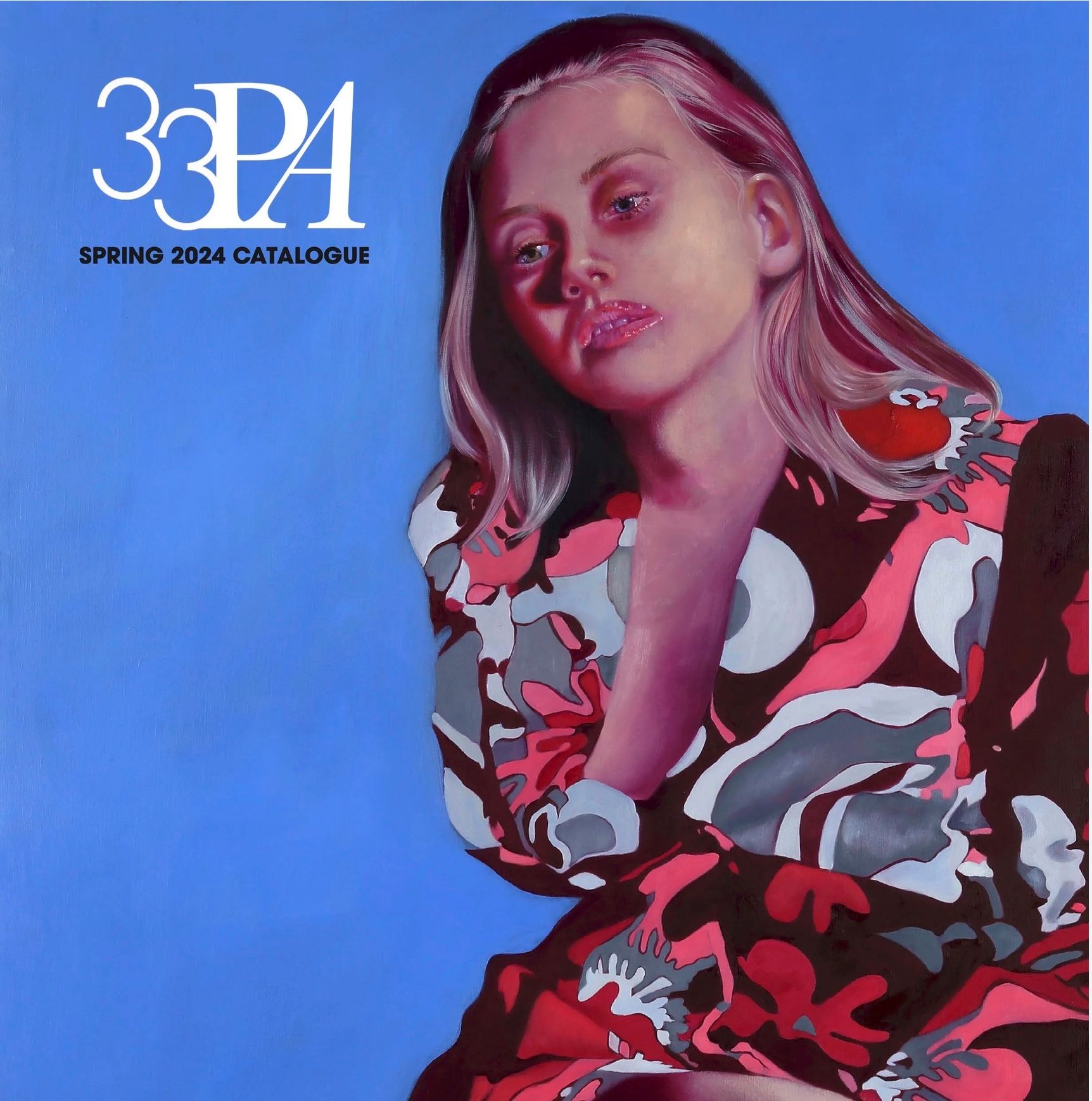 0133PA Spring Catalogue 2024Featuring One Way Ticket on the coverPoetsArtists / 33PAVIEW PUBLICATION (opens in a new tab)
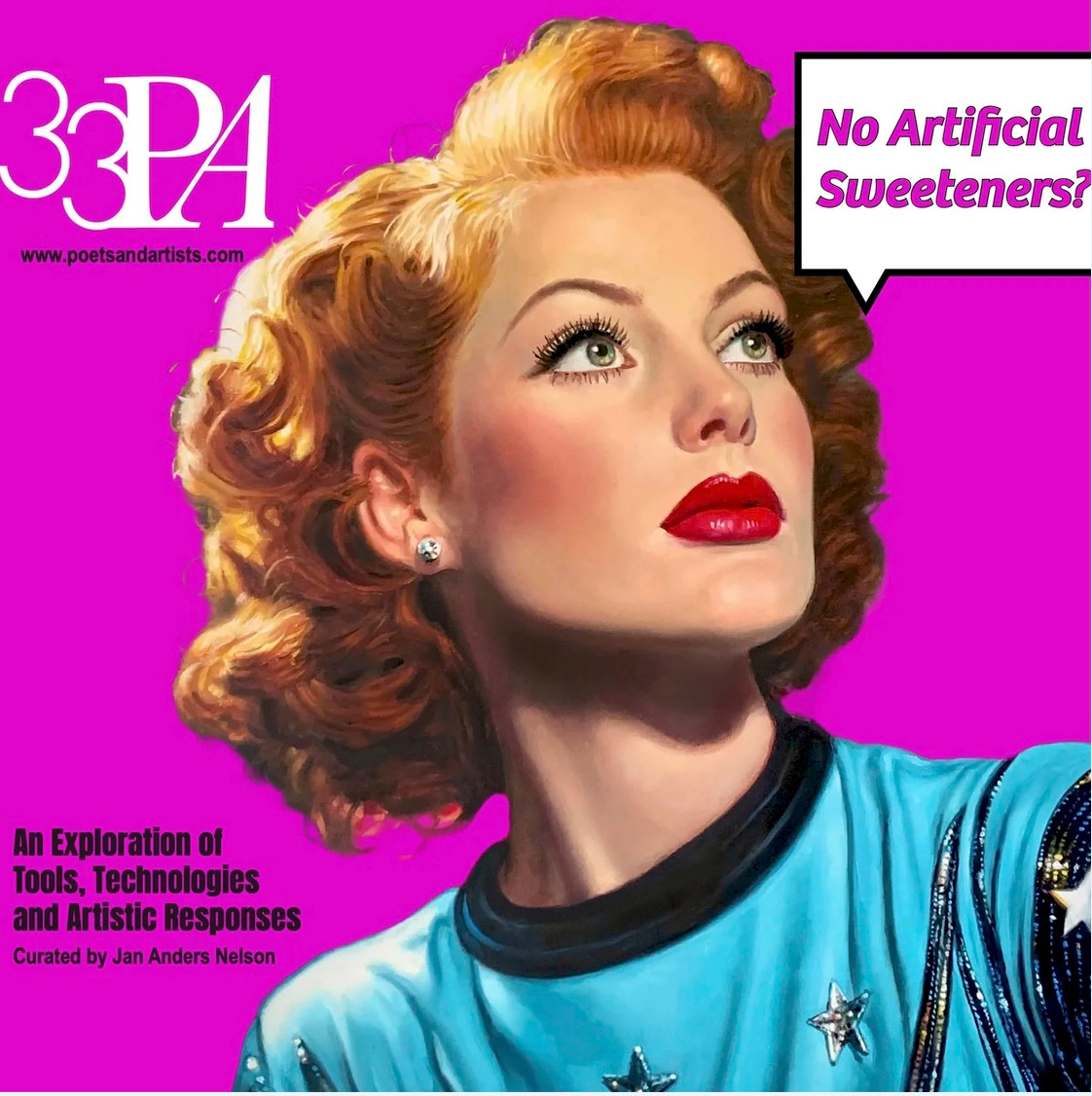 02No Artificial Sweeteners?Featuring artwork by Vivien Kabar inside the publicationPoetsArtists / 33 ContemporaryVIEW PUBLICATION (opens in a new tab)
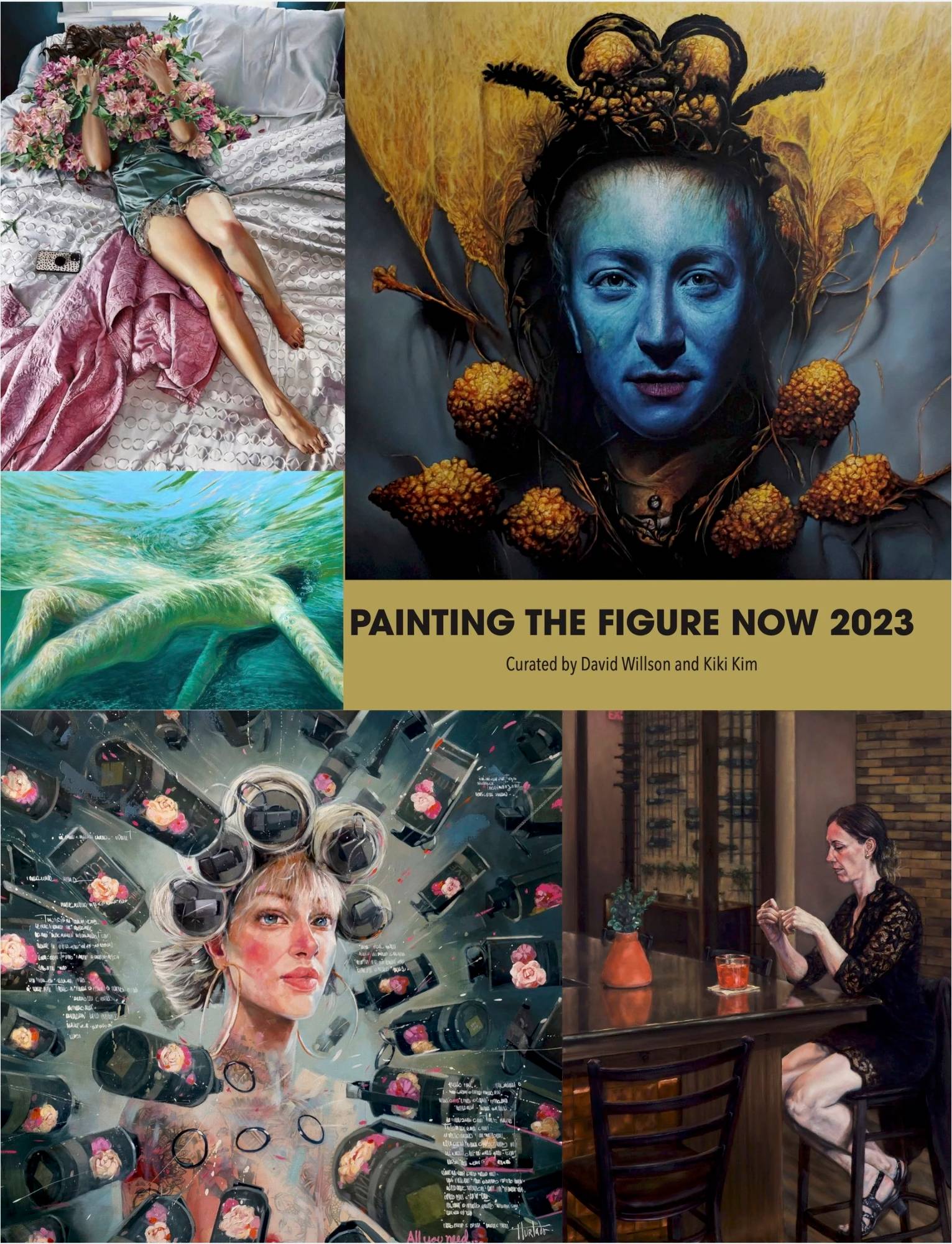 03Painting the Figure Now 2023Exhibition catalogue of the annual exhibition at the Wausau Museum of Contemporary Art (WMOCA), featuring Vivien Kabar's painting MuzzledPoetsArtists / 33 ContemporaryVIEW PUBLICATION (opens in a new tab)
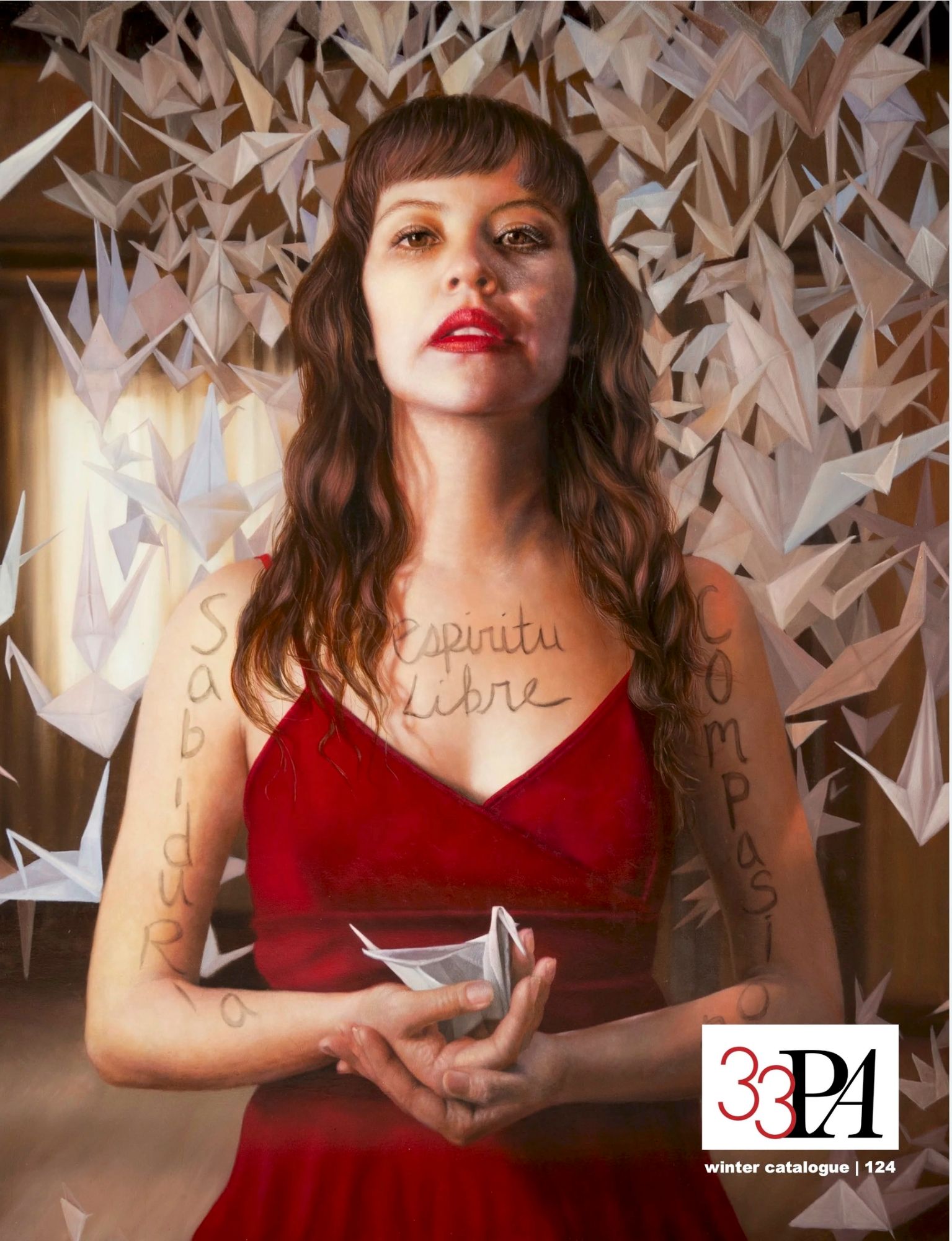 0433PA Winter Catalogue 2024Featuring an interview with Vivien KabarPoetsArtists / 33PAVIEW DIGITAL EDITION (opens in a new tab)
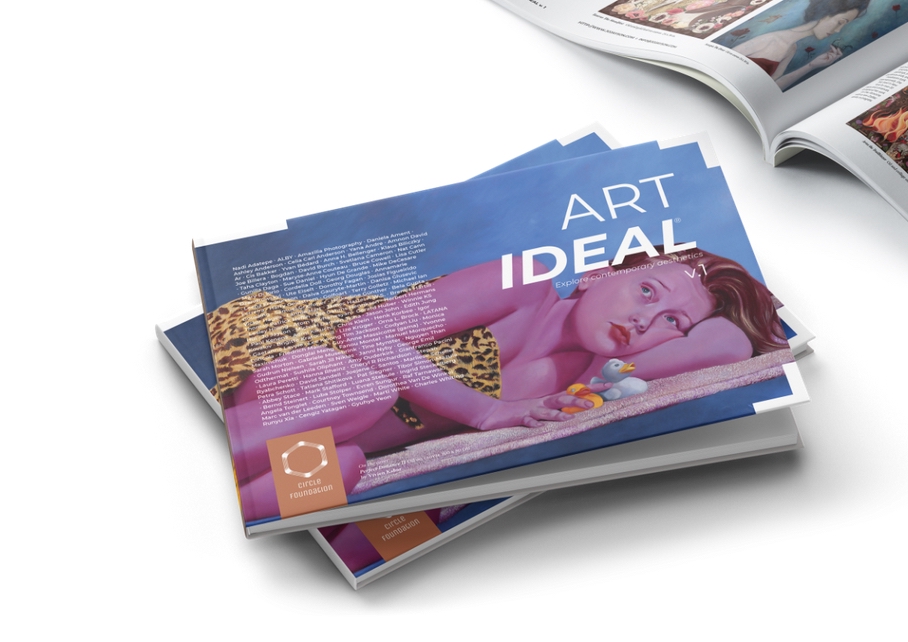 05ART IDEAL — Volume 1Featuring Perfect Distance II on the coverCircle ArtsVIEW PUBLICATION (opens in a new tab)
KONFRONTZONE
ISBN: 978-3-200-05784-5
Vivien Kabar's own catalogue, presenting her work from 2015 to 2018.
WITH CONTRIBUTIONS BY
- Faek Rasul
- Dr. Henri Edelbauer
- Mag. Dr. Eva Maltrovsky
- Prof. Ulrich Gansert